
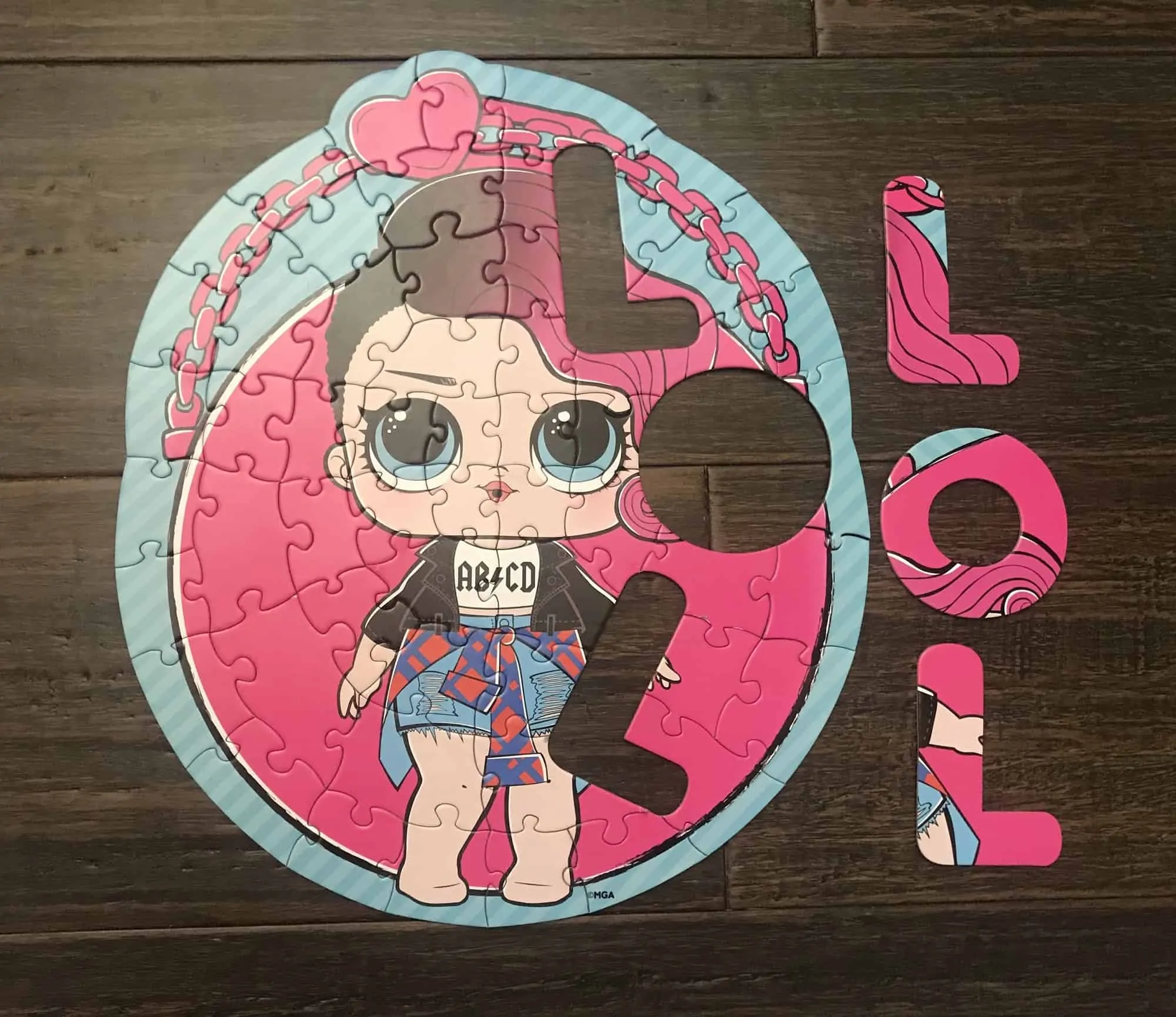
Puzzles can be an incredibly valuable learning tool for young children. Toddlers and preschoolers experience the many benefits of puzzles for child development as they expand skills in numerous areas while engaged in puzzle-solving games. As both an occupational therapist and a mom, I have spent countless hours working with children on a wide variety of puzzles. Puzzle play offers significant learning advantages, making it much more than a simple pastime.
To begin with, solving puzzles is a powerful brain workout that helps children strengthen concentration, focus, and problem-solving skills. Beyond that, puzzle play enhances visual-perceptual, fine-motor, and cognitive abilities. Equally important, children gain a boost in self-esteem and satisfaction when they successfully complete a puzzle—a rewarding bonus that reinforces persistence and effort.
Fine Motor Skills Development
A child develops fine motor skills by using precise movements to place puzzle pieces in the correct spot. One of the key benefits of puzzles for child development is that children must pick up, flip, turn, twist, pinch, and grasp puzzle pieces, especially when the parts are small or have knobs. They improve their pincer grip when moving pieces with knobs and strengthen finger dexterity when handling a variety of puzzle pieces. As a result, preschoolers build the small muscles in their hands and fingers, which leads to enhanced grasping skills used in writing, drawing, and playing musical instruments.
In the same way, puzzles also improve hand-eye coordination. Preschoolers spend valuable time practicing how to coordinate what their eyes see, how their brains process the information, and what their hands can do. When playing with puzzles, children position and move pieces, learning exactly what fits and how. They coordinate eye movement with hand action, which boosts their hand-eye coordination skills. This ability is one of the most critical benefits of puzzles for child development, as it supports essential life and academic skills such as writing, reading, self-care, and playing sports.
Increased Concentration
Putting puzzles together requires a child’s full attention and focus. One of the key benefits of puzzles for child development is that they provide an exciting opportunity for children to concentrate on a task over time. Puzzle play offers a mental challenge, as children work through each step in order until the puzzle is complete. They use higher-level thinking skills to accomplish a goal and stay engaged until they experience the reward of completion. For maximum engagement, puzzle selection should match each child’s developmental abilities and provide just the right amount of challenge.
Equally important, choosing the right puzzles further supports the benefits of puzzles for child development by fostering confidence and perseverance. Puzzles that are too difficult may discourage participation, so it’s important to consider a child’s age, skill level, and interests when selecting the most motivating options. Appropriately chosen puzzles will fully engage children and encourage them to perform their best work. By including regular puzzle play in early childhood education, children have frequent opportunities to strengthen focus, enhance perseverance, and improve concentration skills.
Improved Self-Esteem
As a parent, there is nothing better than seeing your child succeed in the completion of a task. When a child figures out a puzzle and places all puzzle pieces where they fit, he/she feels accomplished and proud. Puzzle play helps children realize that they can solve puzzles that might seem difficult at first. With a little bit of patience and planning, children can learn to complete puzzles quickly. Finishing a hard puzzle is a huge achievement that will skyrocket the child’s self-esteem. Mastering puzzles builds healthy confidence in young children and leads to increased motivation for further skill aptitude.
Improve Problem-Solving Skills
A variety of different puzzles highlights the many benefits of puzzles for child development, especially in expanding problem-solving skills. Even the simplest puzzles put toddlers into the mindset of wanting to achieve a goal. When children solve puzzles, they create and test strategies to figure out how the pieces fit in the right places. They sort and group puzzle pieces by shape, size, color, and other features. They also decide on a starting point—whether that’s the corner, side, or middle—and identify how to connect the pieces.
Moreover, puzzle play reinforces the benefits of puzzles for child development by encouraging children to turn, flip, position, move, and twist pieces to make them fit. Working on challenging puzzles becomes an excellent mental workout, improving both problem-solving and reasoning skills. This solution-oriented mindset is a powerful habit for children to practice early, laying a strong foundation for future learning and critical thinking.
Improve Visual-Perceptual Skills
Working on puzzle play offers powerful benefits of puzzles for child development, particularly in advancing visual-perceptual skills. Through puzzles, children learn to organize what they see with their eyes and create meaningful sense from it. Importantly, visual-perceptual skills are not the same as visual acuity. While assembling a puzzle, children discover that separate pieces form a complete picture. They also notice differences and similarities based on size, color, and shape.
In addition, puzzle play supports the benefits of puzzles for child development by helping children recall visual traits and sequence pieces in the correct order. As they manipulate puzzle parts, they learn that a shape remains the same even when rotated. Furthermore, they practice locating puzzle pieces in a busy background, which strengthens their ability to focus on crucial visual information. Since visual-perceptual skills are essential for academic success—such as reading, math, writing, and copying from the board—providing abundant puzzle play opportunities will consistently foster growth in this area.
How to pick the most appropriate puzzles
There is a rich assortment of puzzles on the market. They have various degrees of complexity based on the number of pieces, size of the parts, and designs. It is necessary to assess a child’s skill level and interests, as well as a child’s age to pick appropriate puzzles. Start with simple puzzles that are easy to complete and then gradually work the way up to more complex puzzles.
Types of puzzles:
Inset Knob Puzzle
Inset puzzles with jumbo knobs, 3-5 pieces, matching picture underneath
· Every puzzle piece has a jumbo knob for easy grasp to place a piece in the proper location.
· Start with a three-piece puzzle and gradually increase the number of pieces to step-up the level of difficulty (eight-piece-puzzle).
· Matching pictures underneath to cue children with proper puzzle piece placement.
· Best for toddlers 12 months to 24 months

Jigsaw Chunky Puzzle
Jigsaw chunky 2-6 piece puzzles, matching picture underneath
· Chunky wooden pieces are easy to grasp for small hands and hard to swallow.
· Matching picture underneath to cue children with proper puzzler placement.
· Best for toddlers 18 months and up.
Inset Puzzle
Inset puzzles, chunky wooden pieces, 6-12 pieces, matching picture underneath / no matching picture underneath
· Chunky wooden pieces easy to grasp for small hands
· Start with a six-piece puzzle and gradually increase the number of pieces to step-up the level of difficulty.
· Matching pictures underneath to assist children with the proper puzzle placement.
· A puzzle without the matching image is more challenging as the child needs to focus more on the shape to fit the puzzle piece in the correct place.
· Best for children 2 to 4 years.

Jigsaw Chunky Puzzle
Jigsaw chunky wooden 2-6 piece puzzles, no matching picture underneath
· Chunky wooden pieces are easy to grasp for small hands and hard to swallow.
· The child focuses on the shape without additional visual cues to fit the puzzle piece in the correct spot.
· Best to toddlers 2 to 4 years.
Inset Peg Puzzle
Inset peg puzzles, 8- pieces and up, matching picture underneath / no matching picture underneath
· Every puzzle piece has a peg for easy grip, comes with plastic or wood pegs.
· Puzzles come with 8- pieces, and more might have up to 26 if it is an alphabet puzzle.
· Matching pictures underneath to assist children with the proper puzzle placement.
· A puzzle without the matching image is more challenging as the child needs to focus more on the shape to fit the puzzle piece in the correct place.
· Some puzzles come with sound features.
· Best for children 2 to 4 years.

Jigsaw 12 Pieces Puzzle
Jigsaw wooden puzzles, 12 pieces and up, matching picture underneath / no matching picture underneath
· Jigsaw wooden pieces generally come with 8-20 pieces.
· Matching pictures underneath to cue children with the proper puzzle placement.
· Sometimes comes with visual cues, however, not exactly matching.
· A puzzle without the matching image is more challenging as the child needs to focus more on the shape to fit the puzzle piece in the correct place.
· Best for children 3 to 6 years

Jigsaw 24-50 Pieces Jumbo Floor Puzzle
Jigsaw recycled paper jumbo floor puzzles, 24-50 pieces
· Jigsaw recycled paper jumbo puzzle pieces.
· Generally comes with 24 pieces and more.
· Some of the jumbo floor puzzles follow a sequence, such as numbers and letters.
· Best for children 3 to 6 years old.

Jigsaw 24-48 Pieces Table Puzzle
Jigsaw recycled paper table puzzles, 24-48 pieces
· Jigsaw recycled paper table puzzle pieces.
· Generally comes with 24 pieces and more.
· Children use the sample picture for guidance to put together a puzzle.
· Best for children 3 to 6 years old.

Jigsaw 60 Pieces Table Puzzle
Jigsaw recycled paper table puzzles with more than 60 pieces are generally designed for children 5-years and older

Jigsaw 100 Pieces Floor Puzzle
Jigsaw recycled paper table and floor puzzles with more than 100 pieces are generally designed for children 6-years and older.

Fine Motor Puzzles
are designed for children 3 to 6 years old to assist with specific fine motor practice.

Conclusion
Puzzle play is an essential educational tool in early childhood development. Beautiful and engaging puzzles allow children to enjoy the many benefits of puzzles for child development while they learn critical skills through play. Assembling puzzles is not only fun but also a brain-boosting activity that supports problem-solving abilities, increases concentration, and builds confidence.
Additionally, puzzle play enhances fine-motor skills and strengthens visual-perceptual skills, both of which are essential for future academic success. These abilities help children excel in reading, math, and writing as they progress through school. Ultimately, investing in enjoyable family time with puzzles encourages children to engage in this valuable activity frequently, leading to long-term developmental rewards.
If you enjoyed this blog post, please share it with a friend!
0 Comments