
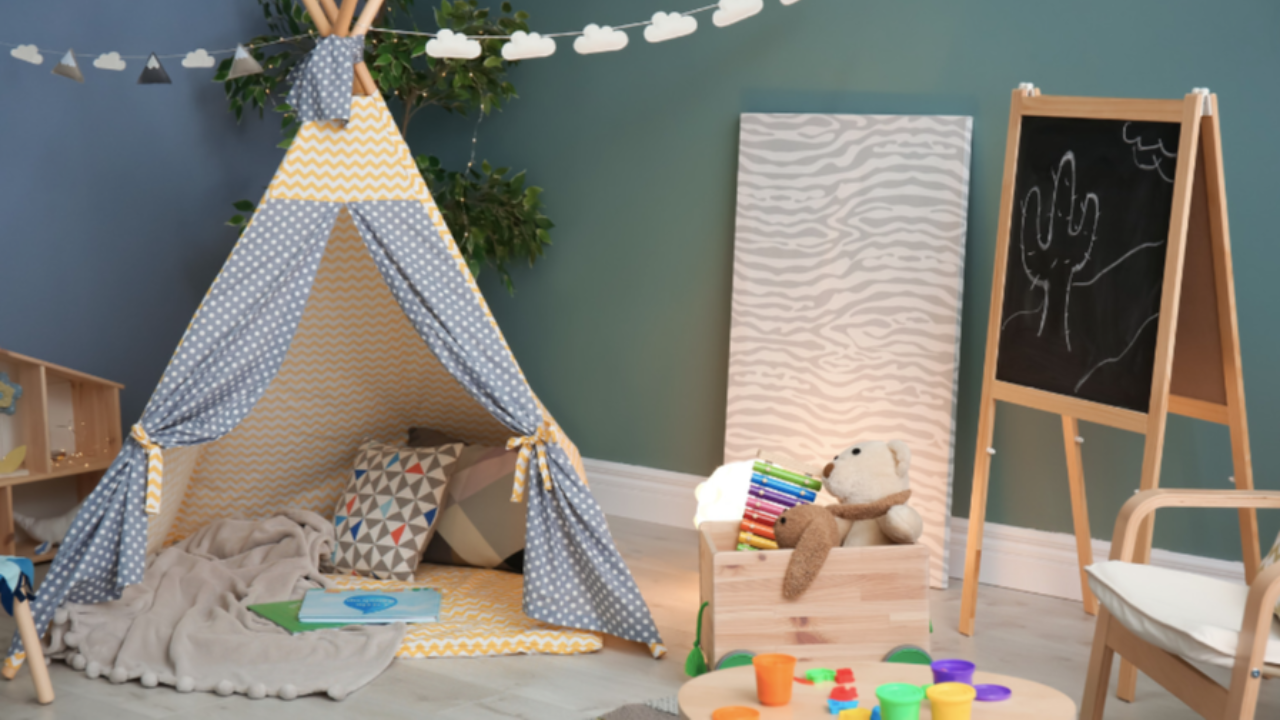
Calming spaces for kids are one of the most important things I teach parents and educators about as a pediatric occupational therapist, because children cannot learn, connect, or problem-solve when their nervous system is overwhelmed. When big emotions take over—whether it’s frustration, fear, anger, or sensory overload—the thinking brain goes offline, and the body shifts into a stress response. In these moments, more talking, lecturing, or insisting often does the opposite of what we hope — which is exactly why calming spaces for kids make such a powerful difference.
That’s why creating calming spaces at home and calming corners in schools is not a luxury—it’s a foundational support for emotional development, sensory regulation, and learning.
Why Big Emotions Stop Learning
When children are flooded with big feelings, they shift into a protective state—fight, flight, or freeze. From a neurological lens, that means the prefrontal cortex (the learning and reasoning center) becomes less active, and the lower brain (survival mode) takes over.
Decades of research in education and developmental neuroscience show that stressed children do not process language effectively, retain instructions, or follow multi-step directions. The more we talk in those moments, the more overwhelmed they become.
You might see:
- Blank stares
- Defiance or aggression
- Shutting down
- Running away or hiding
- Meltdowns
It’s not that they won’t listen — it’s that they can’t.
Regulation Before Expectation
There’s a phrase I use often with families and teachers:
“We must regulate before we can educate.”
Children learn best when their body and brain feel safe, calm, and connected. If their emotional state is dysregulated, we need to address the nervous system first—not the behavior.
Developing emotional regulation is not just a “nice skill.” It directly impacts:
✅ Confidence
✅ Social skills
✅ Attention and focus
✅ Problem-solving
✅ Academic readiness
✅ Emotional resilience
Children who are supported in their regulation early in life tend to be happier, more confident, and stronger learners in the long term.
The Role of Polyvagal Theory
The Polyvagal Theory, developed by Dr. Stephen Porges, helps explain why sensory calming spaces and co-regulation are so effective in addressing emotional regulation. It tells us that the state of the nervous system determines how a child feels, acts, and responds to their environment.
The three primary states:
Safe & Regulated (Ventral Vagal State)
Calm, engaged, curious, connected — ready to learn and interact
Fight or Flight (Sympathetic Arousal)
Tantrums, yelling, running, arguing, hyperactivity — body in defense mode
Shut Down / Freeze (Dorsal Vagal State)
Hiding, silence, collapse, withdrawal — nervous system overwhelmed
When a child is dysregulated, the goal is not to correct behavior—it’s to shift their state back into a safe one. This happens through co-regulation, sensory supports, and visual tools that guide emotional recovery.
Why Visuals Work Better Than Words During Dysregulation
When kids are overwhelmed, they process visuals far more effectively than words. That’s why emotional cue cards, breathing visuals, and simple images are so much more powerful than phrases like:
❌ “Calm down.”
❌ “Use your words.”
❌ “Take a deep breath.”
❌ “You’re fine.”
Visual supports bypass the language-processing barrier and provide a concrete reference point to follow. They also empower independence and consistency across caregivers.
Mentioning visual and sensory supports within calming spaces at home and in the classroom helps both adults and children respond in real-time.

What Is a Calming Space or Calming Corner?
A calming space at home or a calming corner (or calming space) in the classroom is a safe, inviting area where children can:
- Feel supported, not punished
- Take breaks when overwhelmed
- Use sensory and visual tools to recover
- Build self-awareness and independence
- Practice regulation skills with or without an adult
These emotional regulation spaces support both home environments and school settings.
Creating a Calming Corner (or Calming Space) in the Classroom
In schools, a calming corner (or calming space) can be small and simple while still being effective.
Helpful classroom calming corner tools include:
✅ Soft seating (bean bag, cushion, floor mat)
✅ Visuals of feelings (emotion posters or cards)
✅ Calming strategy cards (breathing visuals, yoga poses)
✅ Fidget tools (stress balls, putty, tangle toys)
✅ Sensory bottles or glitter jars
✅ Headphones or quiet divider
✅ Timer (for independence and transition)
Teachers often report fewer meltdowns, smoother transitions, and greater independence when calming corners are accessible—not just during crises, but also throughout the day.
Creating a Calming Space for Kids at Home
A calming space at home can be simple, flexible, and tailored to your environment. It doesn’t need to be a full corner—it can be:
- A floor pillow in a cozy spot
- A small tent or pop-up fort
- A cushion with a basket of tools
- A quiet bedroom or reading nook
Great calming tools for home include:
✅ Cozy blanket or stuffed animal
✅ Breathing visuals
✅ Calming strategy cards
✅ Sensory bottles
✅ Putty or fidget toys
✅ Books about feelings
✅ Noise-canceling headphones
✅ Soft lighting or fairy lights
At home, this space should always feel supportive and optional—not like a time-out or a place of isolation.
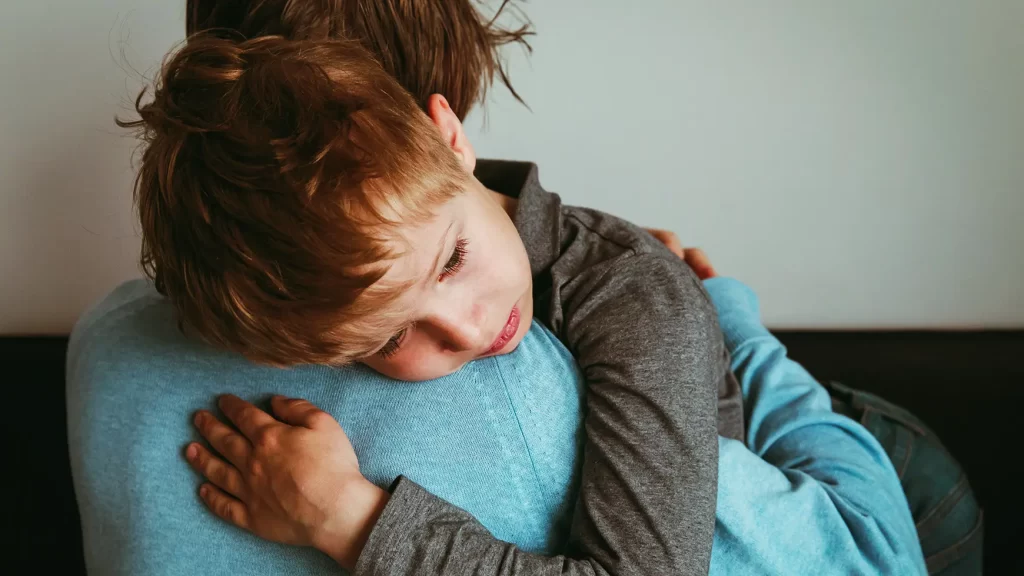
Co-Regulation: The First Step in Calming
Young children don’t calm down alone—they calm down with someone. This is known as co-regulation, and it forms the foundation of all self-regulation.
When a child is overwhelmed, their nervous system goes into survival mode. They can’t access logic or language—but they can respond to the presence of a calm, trusted adult.
Co-regulation looks like:
- Sitting nearby without pressure
- Getting to their eye level
- Breathing slowly and visibly
- Using a gentle, calm voice
- Offering a visual tool
- Saying, “I’m here to help your body feel safe.”
A dysregulated child borrows your calm before they can find their own. Over time, children internalize these experiences and transition into self-regulation.
Why Teaching Self-Regulation Early Matters
Research indicates that self-regulation in early childhood predicts long-term academic achievement, confidence, and emotional resilience more effectively than early academic skills.
Programs that include SEL, calming strategies, and calming spaces for kids reduce:
❌ Challenging behavior
❌ Anxiety
❌ Shutdowns or power struggles
❌ Classroom disruptions
They improve:
✅ Attention and learning
✅ Confidence and independence
✅ Social skills and peer interactions
✅ Emotional maturity
When we invest in calming spaces for kids, we invest in lifelong learning.
Tools You Can Use Right Away
Here are powerful tools you can add to calming spaces at home and in the classroom:
Visual Supports
✔ Calming Cards for Kids
✔ Feelings charts
✔ Breathing posters
✔ First–Then boards
Sensory Tools
✔ Fidgets
✔ Putty or playdough
✔ Sensory bottles
✔ Weighted lap pads
✔ Stretchy bands
Comfort Items
✔ Pillows or bean bags
✔ Stuffed animals
✔ Blankets
✔ Cozy lighting
Movement Options
✔ Wall pushes
✔ Animal walks
✔ Rocking chair
✔ Yoga cards

The Big Picture: Regulation Is a Skill, Not a Behavior Problem
Children aren’t born knowing how to manage big feelings — we teach them. And the earlier we start, the more confident, secure, and successful they become.
When we prioritize calming spaces for kids in both home and school settings, we give children the regulation support their brains are wired to need.
Creating calming spaces for kids at home and in the classroom sends a powerful message:
“Your feelings are safe here. You’re not in trouble. I’ll help you learn how to handle them.”
When a child feels safe, connected, and understood, their brain can return to learning, playing, and growing. That’s the foundation of lifelong regulation.
And it starts with something as simple—and powerful—as a calming space.
Explore More Tools That Support Emotional Regulation
Creating calming spaces for kids is powerful—but pairing them with the right tools makes them even more effective. If you’re ready to support emotional regulation in meaningful, practical ways, here are OT-designed resources you can start using right away:
✅ Calming Cards for Kids
40 printable, child-friendly strategies that support self-regulation in real time.
Explore them here: Calming Cards for Kids
✅ Animal Walks Movement Cards
Perfect for sensory input, calming transitions, and regulation through movement.
Explore them here: Animal Walks Movement Cards
These tools help calming spaces feel safe, accessible, and empowering—because emotional safety builds stronger learners, happier homes, and calmer classrooms.
Articles to Read Next
If you’d like more OT-based strategies, here are helpful reads to continue with:
- How Calming Cards Can Empower Kids to Navigate Big Emotions with Confidence
- Self-Regulation Has a Direct Impact on Children’s Success
- Fun Animal Walk Exercises for Children
- Powerful Sensory Integration in Children
These tools and articles make calming spaces for kids more effective, accessible, and empowering — because emotional safety creates strong learners.
0 Comments