Gross motor skills are the foundation of your child’s development—from their first roll as a baby to hopping, climbing, and skipping as a kindergartener. These big movement skills build strength, balance, and coordination, and they lay the groundwork for fine motor skills, learning, and confidence in school and life.
As a pediatric occupational therapist with over 20 years of experience, I’ve seen firsthand how crucial gross motor development is for children’s success. That’s why I created a Gross Motor Skills Chart (birth to 6 years)—a simple, research-backed tool to help parents, teachers, and therapists track milestones and support growth at every stage.
Gross motor skills involve the large muscles of the body—the core, arms, and legs. These abilities allow children to:
Crawl, walk, and climb
Jump, hop, and balance
Ride tricycles or bikes
Play sports and join group activities
When children master these milestones, they gain not only physical ability but also independence, social confidence, and readiness for school. Strong gross motor foundations support fine motor skills (like handwriting and dressing), cognitive growth, and emotional regulation.
📊 Gross Motor Milestones by Age
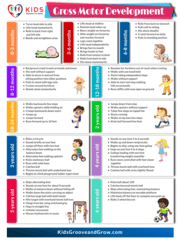
Here are highlights from my Gross Motor Skills Chart (0–72 months):
0–6 months: Lifts head, rolls over, sits with support
6–12 months: Crawls, pulls to stand, cruises along furniture
Every child develops at their own pace, but talk to a pediatrician or occupational therapist if your child:
Isn’t walking by 18 months
Struggles with balance or frequent falls
Avoids gross motor play or tires easily
Early support makes a big difference!
📥 Download Your Gross Motor Skills Chart Today
With my OT-designed Gross Motor Skills Chart (0–6 years), you’ll have a trusted, easy-to-use tool to track milestones, celebrate growth, and build confidence for the future.
Your dedication to supporting children’s development truly matters. If you’d like to continue learning and building your toolkit, here are more OT-approved articles to explore:
Gross motor skills are the foundation of physical development and follow a sequential progression of growth. When our babies first start to move, they learn to lift their heads, roll, sit, crawl, stand, and eventually walk. This development follows a top-down (head to toe) and center-outward (tummy to limbs) pattern. Large muscles—like those in the trunk, shoulders, and hips—develop first to provide the strength and stability needed for the smaller muscles of the hands and fingers to follow. Activities like jumping, running, climbing, catching, and throwing build these core skills, preparing preschoolers for fine motor tasks such as drawing, writing, and cutting with scissors.
Children acquire fine-motor skills more quickly and successfully when they have a strong foundation in gross motor skills. Shoulder strength, coordination, and stability will support the forearm, wrist, and hand, development in children. If a child has a base from which to work, the use of hands and fingers will develop naturally, enjoyably, and skillfully. The child will be ready to progress with the ability to use hands and fingers and complete higher-level hand-eye coordination tasks.
A weak gross motor foundation will affect a child’s fine motor skill development. When the trunk and shoulder muscles tire, a child quickly loses interest and becomes frustrated in desktop activities. Solid shoulder control and trunk stability will provide the necessary stamina and endurance to sustain the use of hands and fingers for tasks such as building with blocks, turning pages in a book, and coloring. Focusing only on the use of hands and fingers without addressing the strengthening and coordination of the core, upper body, and shoulder muscles will cause fatigue, irritation, and impatience during manual school responsibilities.
Naturally, our toddlers and preschoolers are programmed to enjoy a multitude of physical activities that contribute to their growth. Exploring playground equipment, riding a tricycle, and rearranging small furniture around the house is an enjoyable and constructive developmental experience. Spontaneous children who investigate their surroundings have the benefit of their sedentary peers. When babies and toddlers move around frequently, rearrange, and experiment with the world around them, they navigate through obstacles and learn new skills.
Youngsters who are mostly observers throughout their early years are often cautious and carefully calculate their movement risks. They will need additional encouragement and practice to feel comfortable to perform some physical tasks that seem effortless to their classmates. With patience and kindness, most children will eventually enjoy gross motor activities. It is essential to nurture physical competencies in the young child, so she or he feels confident and positive about themselves throughout their school life.
Some children are born with challenging muscular or coordination conditions or demonstrate temperament characteristics that need to be addressed by specialists. Specific diagnoses require specialized therapeutic intervention to improve the motor function of a child. However, some children might refuse to play or complain after physical activities. If this persists, it is best to talk to your pediatrician.
It is beneficial to provide abundant movement opportunities for young children. Toddlers and preschoolers, especially enjoy movement driven learning. Some children might need extra support to nurture the development of essential gross motor skills, and early childhood is the perfect time to make sure our children have plenty of daily movement time.
Research suggests that children between 3 and 5 years old need at least 3 hours of physical activity per day. Our preschoolers continue to work on perfecting their gross motor skills. They are not yet proficient and continue to develop more complex physical movements daily.
Preschoolers need a combination of structured and unstructured movement opportunities to enhance their strength, coordination, and endurance.
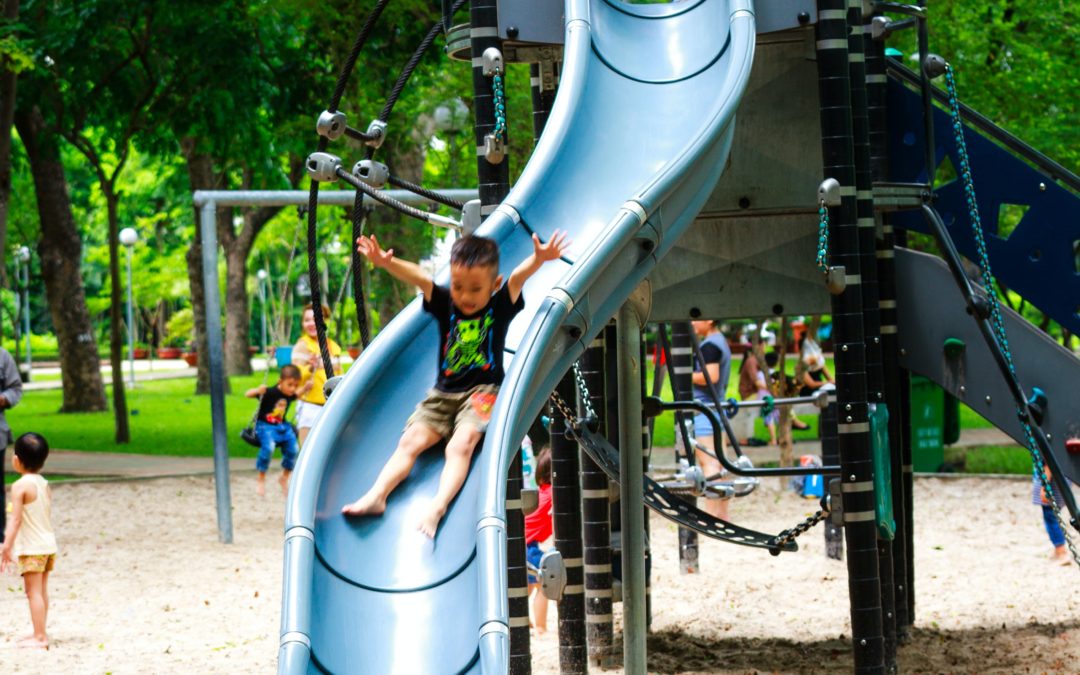
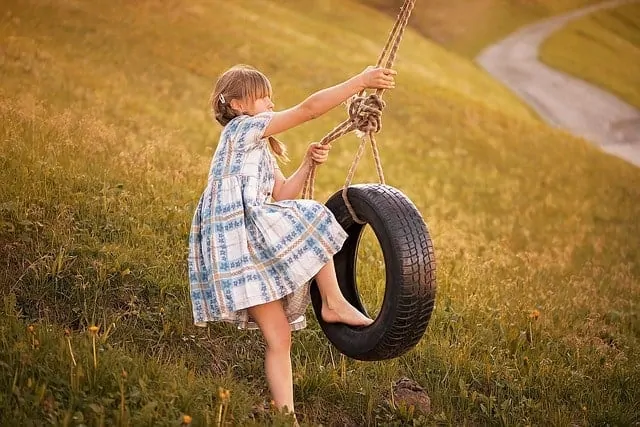
Unstructured physical time would include exploring playground equipment, such as running around, climbing, swinging, and going down the slide. The indoor motor activities consist of playing, moving, and carrying around large items such as chairs, boxes, and blocks that require the use of both arms to pick up. Pushing and pulling with both arms and using both hands to carry large objects is vital. Squatting down, reaching, crawling, dancing, and walking up and down the stairs are other examples of unstructured gross motor activities that kids love to practice at home.
The structured physical play would include games, organized sports, obstacle courses, and specific skill practice drills inside or outside. Some examples of structured gross motor activities would include;
Gross Motor Skills Games
Gross motor skills games for preschoolers—such as bean bag and balloon toss, animal walks (like walking like a bear or leaping like a frog), hopscotch, races, Follow the Leader, and Duck Duck Goose—help build strength, balance, and coordination through active movement and play.
Organized preschool sports like soccer, t-ball, cheerleading, bowling, floor hockey, and football are great for developing gross motor skills, coordination, and teamwork in young children.
Obstacle courses for preschoolers are one of the most effective gross motor activities to build physical confidence and coordination. Navigating through a variety of obstacles and changing body positions strengthens large muscles, balance, and motor planning.
Some fun and skill-building ideas include:
Run, drop, and roll sequences
Crawling through tunnels, jumping over hurdles, walking on a balance beam
Crawling under and climbing over obstacles
Walking on uneven surfaces
Carrying large objects with both arms
Gross motor skill practice helps build strength, coordination, and body awareness in young children. These essential preschool movement skills support overall physical development and prepare kids for active play and classroom readiness.
Key activities to focus on include:
Throwing, catching, kicking, and rolling a ball
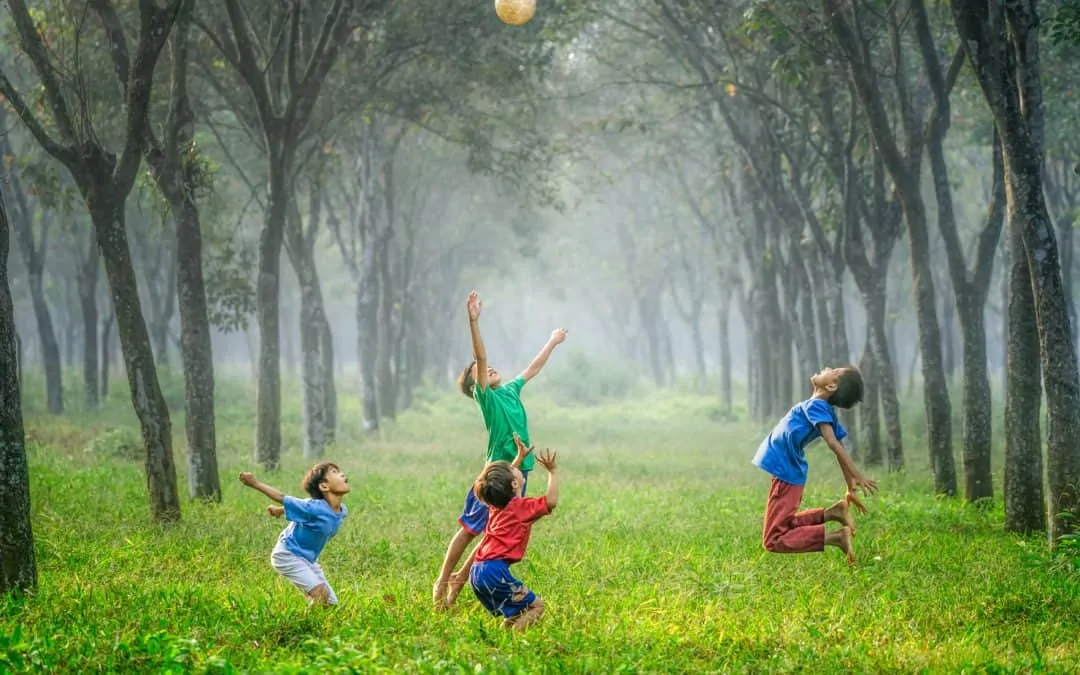
Jumping, running, marching, hopping, climbing, balancing on one leg, skipping, and galloping
Riding a tricycle or scooter to improve coordination and core strength
Conclusion
Building and mastering gross motor skills in early childhood will have a significant favorable influence on children’s confidence, learning, and independence. Acquiring a robust gross motor foundation will provide children with academic readiness for more complex learning tasks. Children will quickly pursue and progress with higher-level hand-eye coordination tasks such as grasping pencil and writing. Little hands and fingers will be ready to take on increasing school demands and will develop naturally and enjoyably.
If you like this post, please share it with a friend!